
Home › Mold and Your Insurance Claim in Lafayette, LA
Mold and Your Insurance Claim in Lafayette, LA
Mold coverage depends on your policy and the cause of the water. Here is how to approach a claim and what to document. Our mold remediation Lafayette, LA crew documents everything your adjuster will ask for.
- Covered loss
- Flood exclusion
- Documentation
- Adjuster
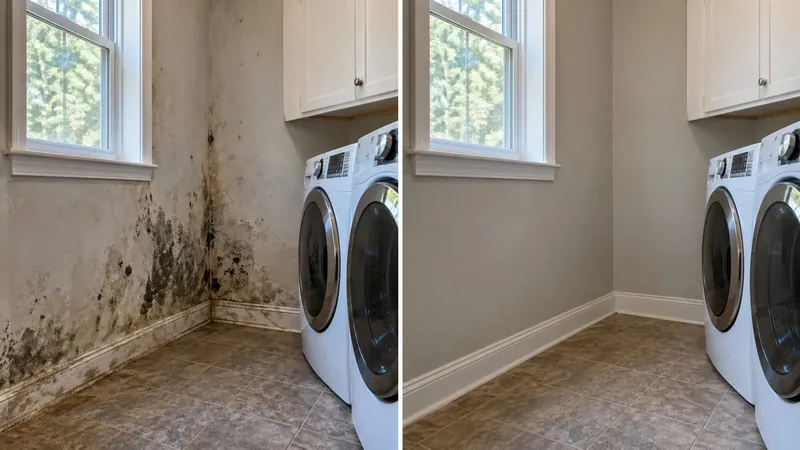
Does homeowners insurance cover mold in Louisiana?
It depends on your policy. Many homeowners policies cover mold only when it results from a covered loss, such as a sudden pipe burst, and may limit the amount. The legal side is covered in Louisiana mold laws. Flooding is generally excluded from standard policies and falls under flood insurance. Read your policy and ask your agent before work begins.
How to approach a claim
Stop further damage
Fix the leak and dry. Insurers expect reasonable steps.
Document
Dated photos and video of damage and mold.
Call early
Report the loss quickly and ask about mold limits.
Get written estimates
Keep scopes and receipts. Call (337) 895-1030 to get a written scope for your claim.
Keep damaged items
Until the adjuster has seen them, if possible.
Why claims get denied
- Long-term seepage or neglect
- Flooding under a standard homeowners policy
- Mold limits or exclusions
- Delay in reporting
The Louisiana Department of Insurance can answer consumer questions about your rights and complaints.
What we can and cannot do
We cannot guarantee coverage. We can give you a written scope and report for your adjuster. See mold after water damage, mold after a flood and mold remediation cost.
Frequently asked questions
Does flood insurance cover mold?
It depends. Flood policies, such as NFIP, have their own rules. Ask your agent.
Should I wait for the adjuster?
Prevent further damage, but do not throw away evidence before documenting it.
What if my claim is denied?
Ask for the reason in writing. You can contact the Louisiana Department of Insurance.
Does the contractor deal with insurance?
Some will provide documentation. You remain the policyholder.
How do I file a mold claim without getting denied?
Report fast, document everything before cleanup, get written moisture readings and a line-item remediation scope, and frame the cause as the sudden event that started it — because that’s what coverage hinges on. Never say “it’s been growing for a while.”
Does Louisiana law require insurers to cover mold?
Louisiana doesn’t mandate mold coverage in homeowners policies — it’s governed by your policy language, especially the mold endorsement and its cap. What Louisiana law does do is govern adjuster timelines and unfair claims practices, so know your rights under state claims-handling rules.
Should I hire a public adjuster for a mold claim?
For small claims under your mold cap, usually not — the fee eats the payout. For large losses where the carrier lowballs the scope, a reputable public adjuster or a well-documented supplement from your remediation contractor often gets further. Get the line-item scope first; that alone resolves many disputes.
Keep reading
Mold after water damage
Leaks, burst pipes and wet materials.
Mold after a flood
The first 48 hours after flooding.
Mold remediation cost
What drives the price and how to compare bids.
What insurance usually covers (and what it doesn’t)
Mold claims in Louisiana live or die on one question: was the water sudden and accidental, or slow and neglected? A burst pipe, a storm-punctured roof, a failed water heater — sudden events are usually covered, and mold that results from them is part of the claim. A leak you lived with for a year, a roof you didn’t repair, condensation you ignored — that’s maintenance, and carriers deny it. There’s a second tripwire: most Louisiana homeowners policies now carry a mold sub-limit, often $5,000–$10,000, regardless of the overall dwelling limit. Big mold jobs can blow past that cap fast. Read your policy’s mold endorsement before you need it. And know that flood insurance (NFIP) generally does not cover mold the adjuster can attribute to moisture you didn’t address — document your response timeline carefully.
Document before you demolish
The order of operations makes or breaks a claim. Photograph and video everything first — wide shots for context, close-ups with a coin or ruler for scale, dates visible. Then get professional moisture readings in writing: adjusters trust meter data over your description of “it was really wet.” Keep every receipt for emergency mitigation (fans, tarps, emergency plumbing) — mitigation costs are usually covered and, more importantly, they prove you acted fast. Do NOT rip out drywall or discard damaged belongings before the adjuster sees them; once it’s gone, you have no proof of scope. If the mold is spreading and you can’t wait, photograph first, keep samples of materials, and save the adjuster’s approval to proceed in writing. The strongest claims read like a timeline: sudden event → immediate documentation → fast mitigation → professional scope.
Working with your adjuster on mold
Adjusters see a lot of inflated mold claims, so your job is to make yours the easy one to approve. Hand them a written remediation scope from a local company with line items — containment, removal square footage, drying, treatment — not a lump-sum number. Separate the water-damage work from the mold work in your paperwork; they’re often evaluated under different coverage lines. Be present during the adjuster’s inspection if you can, and walk them through the moisture readings. If the first offer undervalues the mold scope, a second estimate and a supplement request are normal parts of the process — most legitimate claims settle on the second pass, not the first. And never sign a release or accept a final payment until the remediation is complete and verified dry; premature settlements are how homeowners end up paying the difference themselves.
Lafayette, Louisiana
Talk to a Lafayette mold remediation crew
Call and tell us what you are seeing: where it is, how long the area has been wet and how big it looks. We will tell you plainly whether it sounds like a job for a crew or something you can handle yourself.