Home › Mold Guide › Black Mold
Black Mold: What Is Real and What to Do
Not all black mold is toxic and not all toxic mold is black. Here is what the color tells you, what it does not and how to respond.
- Stachybotrys
- Color is not a test
- Moisture source
- Remove it
Is black mold dangerous?
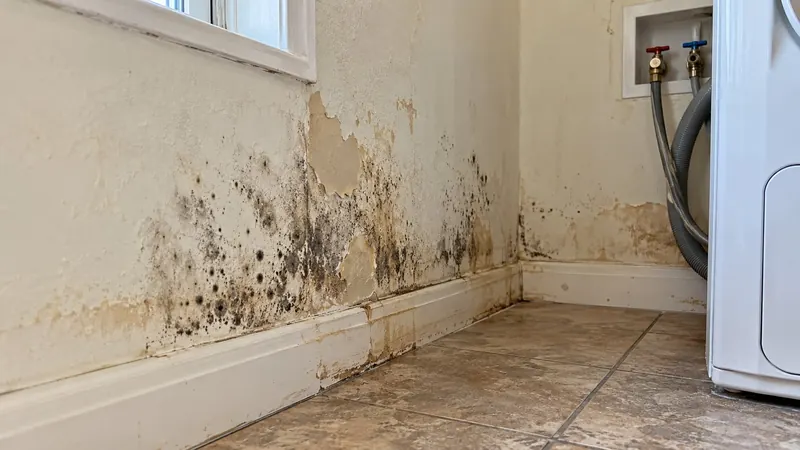
“Black mold” usually refers to Stachybotrys chartarum, which grows on wet cellulose such as drywall paper. But the CDC says you cannot tell how harmful a mold is by its color. Any indoor mold growth should be removed and its moisture source fixed, regardless of color.
What “black mold” means
The name usually points to Stachybotrys chartarum, a greenish-black mold that grows on materials with a lot of cellulose and constant moisture, such as paper-faced drywall, wood and ceiling tiles. Many other molds also look black, including common Cladosporium and Aspergillus species. You cannot identify a species by eye.
What the agencies say
- The CDC says there is no way to know whether a mold is harmful by its color.
- Health effects vary by person and exposure. Mold can trigger allergic reactions, asthma symptoms, nasal and throat irritation and, in some people, more serious responses. People with asthma, allergies or weakened immune systems are at higher risk.
- Identifying the species is generally not necessary. The cleanup approach does not change.
The full list is on our mold exposure symptoms page.
See mold, asthma and allergies for who is most at risk.
What to do if you find black mold
Stop the water
Fix the leak or humidity source. Without this, cleaning is temporary.
Do not disturb it
Do not scrub dry or sweep. That releases spores.
Size it up
Less than about 10 square feet on a hard surface is a typical homeowner job. Larger, hidden or recurring growth needs a crew.
Size and spread are measured in mold levels.
Protect yourself
N95 respirator, gloves, goggles. Keep others out.
Remove porous materials
Moldy drywall, insulation and carpet usually need to come out and be bagged.
Dry and check
Dry everything and confirm with a moisture meter.
Do you need a test to confirm it is black mold?
Usually not. If you can see mold, the response is the same no matter what species it is. Testing is more useful for hidden mold or documentation. See our mold inspection and testing guide.
If you want a crew to look, call (337) 895-1030 or read how mold remediation works.
See mold types in Louisiana for the common ones.
Frequently asked questions
Is black mold more toxic than other mold?
The CDC says color does not indicate how harmful a mold is. Treat all indoor mold growth as something to remove.
Can black mold make you sick?
Mold can cause allergy and respiratory symptoms, especially in people with asthma or weakened immune systems. If you have symptoms, talk to a doctor.
How can I tell if it is Stachybotrys?
Only lab analysis can identify the species, and it is generally not needed. The cleanup steps do not change.
Can I clean black mold with bleach?
The EPA does not recommend routine bleach use. Remove the mold, clean with detergent and water on hard surfaces and fix the moisture. Never mix bleach with ammonia.
Do I need a professional?
If the area is larger than about 10 square feet, keeps returning, followed flooding or is in the HVAC, yes. Showers are the most common spot — see bathroom mold. Growth in the ducts is covered under mold in HVAC ducts.
Keep reading
Mold removal in Lafayette
What gets removed.
Mold inspection and testing
When it helps.
Mold remediation in Lafayette
The process.
Lafayette, Louisiana
Talk to a Lafayette mold remediation crew
Call and tell us what you are seeing: where it is, how long the area has been wet, and how big it looks. We will tell you plainly whether it sounds like a job for a crew or something you can handle yourself.